If you’re a newer fan, it can sometimes feel like the F1 world is speaking gibberish. To help you out, we’ve picked out some important F1 terms to get you up to speed.
Now, they may seem like a lot. Trust us, we know. Formula 1 is a complicated sport involving the brightest engineers, drivers, and strategists in motorsport. But nobody expects you to know everything.
You can always come back to these terms when you need a refresher during a race weekend. Or maybe even during your next F1 betting session. We have everything from general F1 terms to terms about aerodynamics and flags. So, let’s just get straight into it.
General F1 Terms
Our first set of concepts are those you’ll hear in every session of both normal and Sprint race weekends. They cover some things that happen during and between sessions.
- DNF (Did Not Finish): When drivers start a race but don’t finish, usually due to mechanical failures or crashes.
- DNS (Did Not Start): When a driver doesn’t enter or start the race.
- Formation Lap: This lap is done before the start of the race, where drivers warm up their tyres and brakes. They return to their grid position before lights out.
- Lights Out: Before the race officially begins, five red lights turn on one by one. “Lights out” refers to the point all five lights go out, signalling the start of the race.
- Parc Fermé: This refers to the period where cars are placed under supervision from members of F1 and the FIA. Their job is to make sure cars are compliant with regulations. During this time, they aren’t allowed to make any changes to the setup of the car.
- Podium: The podium consists of the top three finishing positions in a Grand Prix (P1, P2, and P3).
- Pole Position: Pole position is first place on the starting grid. Drivers get pole position when they set the fastest lap time during qualifying.
Racing and Overtaking Terms
The next set of terms are arguably the most fun and more action-packed ones. These are what you’ll hear when drivers are busy battling for position on track.
- Boost: The “boost” button is a new feature of F1 cars introduced in 2026 that has replaced DRS (Drag Reduction System) from previous years. It basically changes how the car uses its energy, so they can have a bit more speed to catch up to the car ahead. It does this by saving or “harvesting” power in certain corners and storing it, then using that energy when needed.
- Dirty Air: This is the turbulent air behind an F1 car that makes it difficult for the driver behind them. Dirty air reduces the downforce and grip of the car following closely behind in a corner.
- Overtake Mode: This is a new F1 feature that is similar to boost. However, it is only available to a driver when they are within one second of the car ahead of them. They can use overtake mode to get a small speed increase to help catch up.
- Slipstream: When a driver follows closely behind another car on a straight, it has the opposite effect as dirty air does in a corner. Slipstream is when there is clean air and reduced air resistance. This makes the car behind go slightly faster.
Track Terms
Another important thing to know when it comes to Formula 1 racing is the different parts of the track. After all, how else are you going to know where each driver is or where the action is happening? Here are just a few terms relating to circuits and track layouts.
- Apex: The apex is the inner most point of a corner that all drivers aim for, which lets them optimise their speed and control through the next section of the track.
- Chicane: A sequence of two or more tight corners that bend in opposite directions, like an S-shape. These are designed to change a car’s direction and slightly reduce speed.
- Hairpin: A hairpin is an extremely tight corner of a circuit that turns in close to 180 degrees, letting the car change direction on the track.
- Racing Line: When drivers follow the racing line, they are following the most effective route through the track. The racing line isn’t always the fastest, as some drivers discover better ways to get a faster time.
- Sectors: Each F1 circuit is separated into three sections, called sectors. These usually have slightly different track attributes, so drivers can measure their performance. For example, a driver may be slower in sector 1 which has a series of sharp turns but may be faster in a sector mainly consisting of long straights.
- Track Limits: These are the boundaries of a track, usually shown with white or red and white striped lines. When drivers exceed track limits in qualifying sessions, their lap time is deleted, and they must set a new one. When track limits are exceeded in a race more than three times, they get a time penalty.
Strategy and Pit Stop Terms
The thing about Formula 1, is it’s not always about outright speed. Teams and drivers need to collaborate and have good strategy to make a race work. That’s where some of these next terms come in.
- Box, Box: You’ll hear drivers get told over the radio to “box, box,” which essentially means to come into the pits on their current lap.
- Overcut: An overcut is when a driver stays out longer to gain lap time on their direct competitor. For example, let’s say driver A is 1.5 seconds behind driver B, and driver B stops in the pits. Driver A needs to speed up to gain that time back, so that by the time they pit, they come out ahead of driver B.
- Pit Stop: When drivers stop at their team’s garage to change their tyres during a session.
- Pit Wall: The pit wall is a special setup for senior strategists and team leaders. They sit in front of a series of screens outside of the team garage. These monitors have all the data from the race that strategists use to make decisions throughout the race.
- Pit Window: This refers to range of laps where teams expect a pit stop to fit into their chosen strategy. For example, if driver A is running a two-stop strategy and are using soft tyres, they may expect to make their first pitstop between laps 15 and 20. That’s the pit window.
- Undercut: Unlike an overcut, the undercut is when a driver tries to gain time on their opponent by doing their pit stop first. The goal here is to have newer tyres which allow them to drive faster on their next lap. So, by the time their opponent pits, they are now ahead in terms of track position.
Tyre Terms
Speaking of pit stops, tyres are another important part of an F1 session. The type of tyre used determines how long they can be used at high speeds before degrading, and how much grip cars have to the track surface. Here’s a quick look at some basic tyre terms.
- Tyre Compounds: These are the different types of tyres used throughout the weekend, each of which perform differently in different conditions. There are five main compounds, including softs, mediums, hards, intermediates, and wet weather tyres.
- Graining: When tyres get worn down throughout a race, small pieces of rubber tear away from the tyre surface. Drivers repeatedly drive over these little pieces of rubber and stick to it, creating an uneven surface with less grip.
- Marbles: The small pieces of rubber caused by graining.
- Tyre Wear: As drivers complete laps, their tyres start to gradually lose performance and starts graining. This is also called “tyre degradation” or “tyre deg” for short.
Car Handling and Aerodynamic Terms
Next up, let’s talk about some aerodynamic terms and how the cars themselves act under certain conditions.
Every driver gets caught off guard by the car every now and then. Even the best Formula 1 drivers fall victim to how finicky F1 cars can be on track. We’re not going to get too technical, don’t worry. These are just a few things F1 drivers deal with.
- Bottoming Out: This is when the bottom of an F1 car touches the track at high speeds, often causing sparks that are easily recognisable during a race.
- Lock-Up: A lock up is what happens when an F1 car brakes too hard and the wheels stop turning but rather slide along the track.
- Oversteer: When the rear tyres lose grip and the back of the car slides outward, causing the car to turn more than intended.
- Understeer: This is when the front of the car loses grip and doesn’t turn enough, causing the driver to go straight or take the corner wider.
Formula 1 Flags
We’re at the home stretch now. The final set of terms has to do with F1 flags shown during the race. There are a lot of them, so yes, they can be confusing. Don’t worry, we’ve going to round up our list with the most important flags you need to know.
- Black and White Flag: This is given to specific drivers for certain rule infringements, like exceeding track limits too many times. Any offences after being shown a black and white flag result in a penalty.
- Blue Flag: Warns a slow driver at the back of the field that a faster car is approaching and about to lap them, so they will need to let them pass.
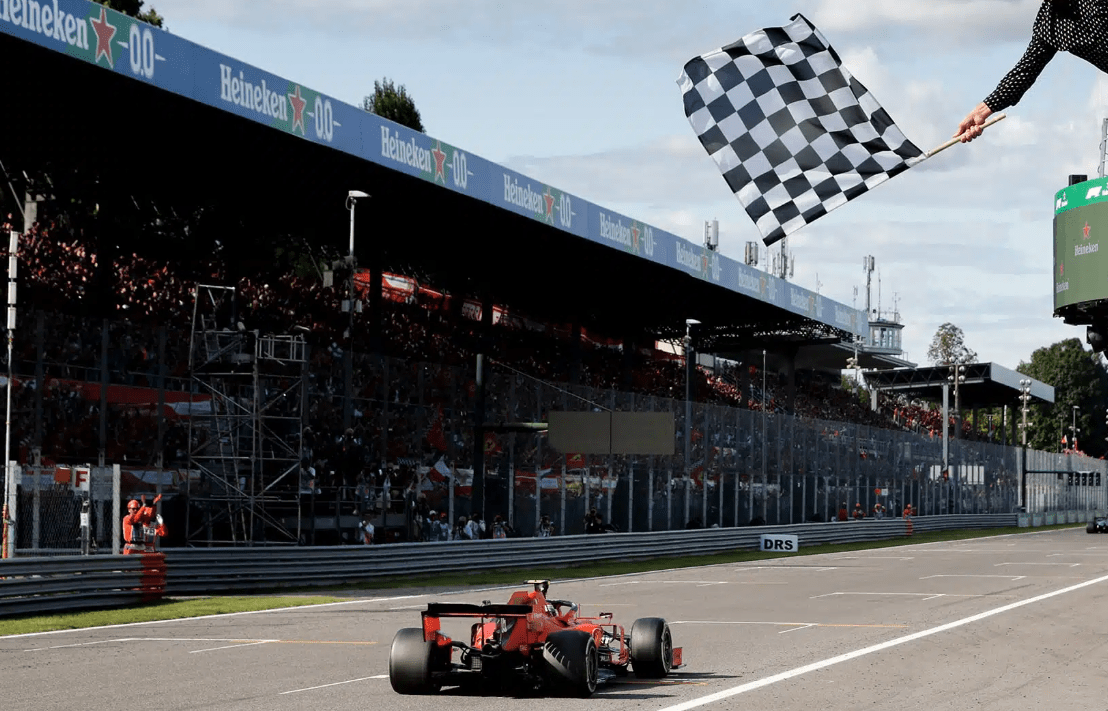
- Checkered Flag: The flag waved at the end of an F1 race to signify the last lap is over.
- Red Flag: Stops the session completely because conditions are unsafe. During a red flag, drivers go back to the pit lane. This can after a serious accident or during extreme weather conditions.
- Yellow Flag: Warns drivers of danger in the section of the track ahead, usually caused by smaller hazards on the track. Drivers need to slow down in areas with a yellow flag in that section until the flag is removed.
Bet on Formula 1 With playTSOGO
With this basic vocabulary, you can now start showing off your knowledge to your fellow motorsport lovers.
Again, you don’t need to know every technical detail to enjoy F1, but understanding the terminology can make it a little easier to follow what’s happening on track. It also helps give you some more context when considering race results, qualifying performances, tyre strategies, and other factors when placing your bets on F1.
Ready to put your newfound knowledge to the test? Visit playTSOGO and register an account or log in if you have one already. Then, browse our F1 betting markets, pick your favourite, and make your first wager.