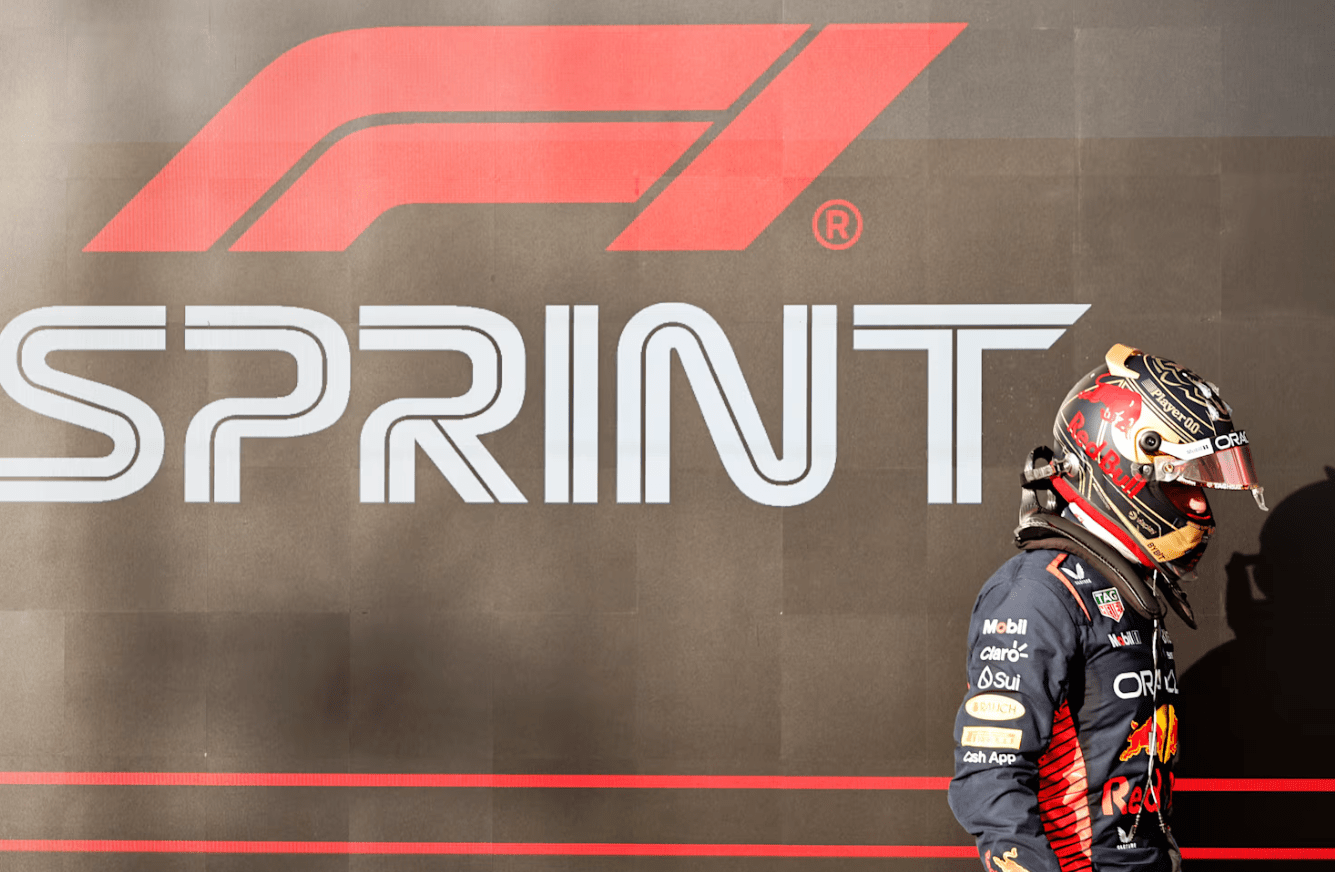
Have you ever tuned in for the Formula 1 race weekend only to find out that the drivers are racing on a Saturday? Well, that’s an F1 Sprint weekend for you. Sprint weekends completely shake up the calendar. They change the free practice frequency, qualifying sessions, and how the race format works.
Sprint races are there to add just a little bit more excitement to an already entertaining race weekend. But what exactly is the difference between a Sprint and a regular Grand Prix? We’re going to unpack everything you need to know about an F1 Sprint before your next race weekend.
What Is an F1 Sprint Race?
Sprint races are a newer development in the world of Formula 1 racing. The first-ever Sprint only took place in 2021 at the iconic Silverstone Circuit. It was followed by two more sprints that year in Monza, Italy, and Interlagos, Brazil. Since then, the format seemed to stick.
An F1 Sprint is basically a mini Grand Prix. It’s a shortened version of a normal race that’s only held a handful of times a year. They cover roughly a third of a traditional Grand Prix distance, so around 100km at each track. And unlike normal races, there are no mandatory pit stops, only one free practice, fewer points up for grabs, and shorter qualifying sessions.
How Many Sprint Weekends Are There in a Season?
In 2021 and 2022, there were only three Sprint races a year, likely due to how new the format was for both teams and drivers. Ever since then, there have been six Sprint events per season, including this year in 2026.
Ultimately, the FIA and F1 management are constantly working to adjust the rules of the sport to cater to the fans, the drivers, and modern developments in racing. So, at any point in the future, the number of Sprints a year can change.
But for now? Six Sprints a year is the sweet spot.
How Does an F1 Sprint Weekend Work?
Like a normal Grand Prix weekend, a Sprint weekend runs across three days. However, the schedule looks a little bit different. The current format is:
- Friday: Free Practice 1 + Sprint Qualifying (replaces Free Practice 2)
- Saturday: F1 Sprint Race (replaces Free Practice 3) + Grand Prix Qualifying
- Sunday: Grand Prix
On a Sprint weekend, drivers only have one free practice session. The second free practice is replaced with Sprint Qualifying, which determines the starting grid for the Sprint race. Sprint Qualifying works the same way as the main qualifying session. There are three rounds, SQ1, SQ2, and SQ3, where the slowest drivers are eliminated at the end of each one.
The Sprint race then takes place the next day, replacing what would have been the third free practice. Then after the Sprint on Saturday, there is normal qualifying for the Grand Prix on Sunday.
The Sprint is meant to be a totally separate event from the Grand Prix, so the Sprint results don’t affect grid positions for the main race.
Why Does Formula 1 Have Sprint Races?
The main reason Formula 1 Sprints were introduced is simply to add more meaningful and competitive sessions to a race weekend. Instead of having to watch free practice sessions where the results don’t really impact the Grand Prix, fans get to watch two extra high-stakes sessions.
The shorter distance of a Sprint race is also designed to put more emphasis on fast, aggressive racing, rather than focusing too much on tyre wear and pit stop strategies. Plus, it means more competitive racing sessions for fans to watch, and who wouldn’t want that?
F1 Sprint vs Grand Prix: Key Differences
Now, let’s get into the specific differences between a Grand Prix and a Sprint weekend. There are quite a few, so here’s a quick summary before we go over each one in more detail.
| Feature | F1 Sprint | Grand Prix |
| Race Distance | 100km ~ | 305km ~ |
| Typical Duration | 30 minutes ~ | 1 hour and 30 minutes – 2 hours ~ |
| Points for Winner | 8 | 25 |
| Points Positions | Top 8 finishers | Top 10 finishers |
| Free Practice Sessions | FP1 | FP1 FP2 FP3 |
| Qualifying Times | SQ1 – 12 minutes SQ2 – 10 minutes SQ3 – 8 minutes | Q1 – 18 minutes Q2 – 15 minutes Q3 – 12 minutes |
| Mandatory Pit Stops | No | Yes (amount is track dependent) |
Race Distance and Duration
The first major difference between a Grand Prix and a Sprint is simply the racing distance and how long the drivers spend on track.
A typical race covers around 305km (except for Monaco, which covers 260km), and normally lasts between one and a half and two hours. Because each circuit has a different length, the number of laps varies greatly. However, the number of laps in a race needs to be the minimum needed to reach or just exceed the 305km mark.
In a Sprint race, the race distance is a third of that at around 100km, which takes roughly 30 minutes to complete.
Let’s use the Dutch Grand Prix weekend as an example, as it’s the next Sprint race weekend. Zandvoort Circuit has a length of 4.259km, a total race distance of 306.648km, and a total number of 72 laps that need to be completed for the main race. The Sprint will be 102,216km total race distance and 24 laps.
Point Scored
Both races contribute toward the Driver’s and Constructor’s Championships in Formula 1, but the Grand Prix offers considerably more points. That’s why you’ll often find that drivers and teams place less emphasis on Sprint races and use them to test different settings on the car. Because there is less risk.
In the Sprint, only the top eight drivers earn points. In the main race, the top ten. The number of points also differs slightly. Here’s a quick breakdown:
| Finishing Position | Sprint Race Points | Grand Prix Points |
| P1 | 8 | 25 |
| P2 | 7 | 18 |
| P3 | 6 | 15 |
| P4 | 5 | 12 |
| P5 | 4 | 10 |
| P6 | 3 | 8 |
| P7 | 2 | 6 |
| P8 | 1 | 4 |
| P9 | 2 | |
| P10 | 1 |
Free Practice Sessions
The next key difference is what many fans notice first, and it’s the number of free practice sessions.
A standard F1 weekend consists of three one-hour free practice sessions, two on Friday (FP1 and FP2) and one on Saturday (FP3). That means drivers get a total of three hours of practice time to test different setups on their cars and get used to track conditions.
Sprint weekends only have one free practice session (FP1) on Friday, and the other two sessions are replaced by the Sprint Qualifying and Sprint race. With only one hour of practice time, there’s more pressure on the drivers to do as much learning as possible before competitive sessions start.
Qualifying Sessions
Both Sprint Qualifying and Grand Prix Qualifying take place during a Sprint weekend. They have three sessions each, where the slowest drivers are eliminated after each one. Basically, Sprint and Grand Prix qualifying sessions work the same way, but the only difference is how long each one lasts.
- Grand Prix Qualifying: Q1 (18 minutes), Q2 (15 minutes), and Q3 (12 minutes)
- Sprint Qualifying: SQ1 (12 minutes), SQ2 (10 minutes), and SQ3 (8 minutes)
The shorter Sprint qualifying sessions mean drivers usually only have one meaningful run around the track to set their time. One run, one chance to qualify.
Pit Stops and Race Strategy
Unlike the main race on Sunday, where teams need to manage tyres and worry about pit strategies, Sprint races have no mandatory pit stops. Standard races require drivers to stop at least once during a race, sometimes twice, which can influence the outcome of the race dramatically.
In Sprint races, drivers simply need to race. No need to plan the next pit stop or manage their speed to avoid tyre wear. That’s why Sprints tend to feel more like a flat-out dash, where drivers push the cars to their absolute limits.
Bet on Formula 1 Sprints With playTSOGO
Even though the Sprint race has less points on the table, that doesn’t mean it’s less important than the main Grand Prix. Because at the end of the day, eight points can still make or break a driver and team’s championship.
Now that you know everything about Sprint weekends, you’re perfectly set up to start betting on Formula 1 with playTSOGO. We have plenty of markets available, including some exciting Sprint race categories. Whether you’re backing the Sprint winner or who will qualify on pole, all you need to do is log in or register an account, explore our Motor Sport markets, and start betting!
Frequently Asked Questions (FAQs)
How long is a Sprint race in F1?
An F1 Sprint race is around 100km, which is around a third of the usual race distance. Sprints run for about 30 minutes.
How many points do drivers get for winning a Sprint race?
The winning driver in a Sprint race receives 8 points.
Does the F1 Sprint determine the starting grid for the Grand Prix?
No. The Sprint is a separate event, meaning that Sprint Qualifying determines the starting grid of the Sprint, and normal qualifying determines positions for the Grand Prix. The finishing results for the Sprint have no effect on Sunday’s race.
Do drivers make pit stops during an F1 Sprint?
They can, but there is no mandatory pit stop. In usual race conditions, when the car is working well and there are no incidents, drivers don’t make a pit stop during a Sprint. However, they may stop if there’s a racing incident, a penalty has been applied, or other factors.
Does the Sprint race in F1 affect qualifying?
The Sprint can have an influence on qualifying, particularly if there’s crash damage. Since Sprints are racing sessions, drivers can push the car more, which may lead to damage if in a collision. That means the teams need to repair the damage before main qualifying on the same day. This can affect qualifying results and car performance.